There’s a special kind of magic around a holiday table. Family chatter, that incredible smell coming from the kitchen, and the promise of a shared feast. For many of us, the star of that Easter feast is a magnificent, glistening ham.
It’s beautiful. It’s traditional. And it’s a salt bomb in disguise.
Let’s talk about that holiday ham. It gets its flavor and long shelf-life from a curing process that involves a massive amount of salt. A single, average serving can easily contain over 1,200 mg of sodium—and that’s before the salty, sugary, glaze that most of us brush on top.
If you’ve been working hard to reduce your sodium, seeing that number can feel incredibly defeating. So, does enjoying Easter with your family mean you have to accept the consequences: the bloating, the thirst, and the sluggish feeling that ruins the rest of your holiday afternoon? Does it mean you’re relegated to a sad, plain salad while everyone else enjoys the main event?
Absolutely not. Take a deep breath. You are not giving up your seat at the feast.
This isn’t about sacrificing tradition or flavor. It’s about making a simple, brilliant swap that puts you back in the driver’s seat. We’re going to create a showstopper centerpiece that is just as impressive and even more delicious, without the sodium hangover.
Here’s how to build a better Easter feast:
1. Ditch the Salty Ham, Embrace the Fresh.
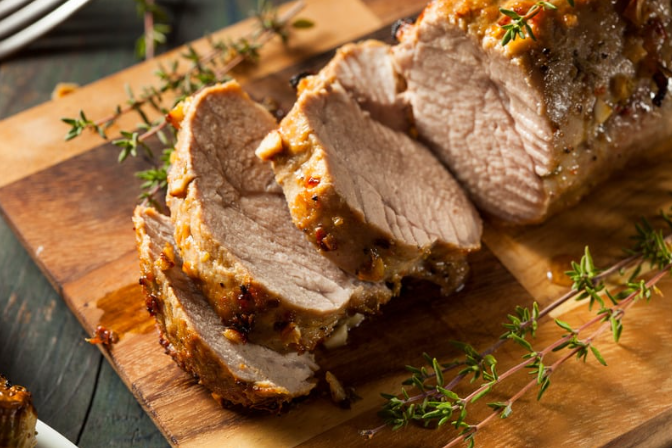
The easiest win is to sidestep the main culprit entirely. Instead of a cured ham, walk right past it to the butcher counter and pick up a beautiful fresh pork loin roast. It’s a lean, tender, and naturally low-sodium cut of meat that is the perfect backdrop for incredible flavor. A leg of lamb or a whole roasted chicken are also great, naturally low-sodium options.
2. Become a Glaze Guru.
The secret to a memorable roast is a killer glaze. Instead of buying a pre-made packet (another sodium and sugar trap), we’ll make our own. The formula is simple: combine a little sweetness (from fruit), a little tang (from vinegar), and a lot of aromatics (from spices). This approach builds layers of complex flavor that is way more delicious than salt.
3. Master Your Sides.
Use fresh or frozen green beans instead of canned. Make your mashed potatoes with low-sodium broth and herbs instead of salt. Roast your carrots and asparagus with a drizzle of olive oil and your favorite salt-free seasonings. You’ll be amazed at how vibrant everything tastes.
The Ultimate Power Move: My Showstopper Easter Roast
This is it. This is the recipe that will make you forget ham ever existed. It’s elegant, incredibly flavorful, and leaves you feeling light and energized after the meal.
Roasted Pork Loin with Tangy Apricot-Mustard Glaze
This recipe creates a gorgeous, caramelized crust and keeps the pork unbelievably juicy.
What you need:
- One 3-4 lb boneless pork loin roast
- 1 tbsp olive oil
- ½ cup no-sugar-added apricot preserves (or orange marmalade)
- 2 tbsp Dijon mustard (look for the lowest sodium brand you can find; the flavor is concentrated, so a little goes a long way)
- 1 tbsp apple cider vinegar
- 1 tsp garlic powder
- ½ tsp ground ginger
- ¼ tsp ground cloves
What you do:
- Preheat your oven to 375°F (190°C). Pat the pork loin completely dry with paper towels (this is key for a good sear!).
- Heat the olive oil in a large, oven-safe skillet or Dutch oven over medium-high heat. Carefully place the pork loin in the hot pan and sear it for 2-3 minutes per side, until it’s golden brown all over. Don’t skip this step—it builds a massive amount of flavor!
- While the pork is searing, whisk together the apricot preserves, Dijon mustard, apple cider vinegar, garlic powder, ground ginger, and cloves in a small bowl. This is your magic glaze.
- Once the pork is seared, turn off the heat. Brush about a third of the glaze all over the top and sides of the roast.
- Transfer the skillet to the preheated oven (or move the roast to a baking dish if your skillet isn’t oven-safe). Roast for 45 minutes.
- After 45 minutes, brush another third of the glaze over the pork. Continue to roast for another 15-25 minutes, or until a meat thermometer inserted into the thickest part reads 145°F.
- Remove the roast from the oven and brush with the final third of the glaze. Let it rest on a cutting board for at least 10 minutes before slicing. This is crucial for a juicy result!
That’s it. You’ve just created a stunning, delicious, and deeply satisfying Easter centerpiece that loves you back. You can enjoy the meal, enjoy your family, and—most importantly—enjoy feeling fantastic all day long.
See? You can have the feast and the freedom. Have a very Happy Easter, Enjoy!